The best rat traps for a garden or shed are fully enclosed, kill instantly and need no poison. Outdoors you share the space with hedgehogs, birds, squirrels, foxes and pets, so the trap has to stop rats without putting anything else at risk. This guide covers which rat traps suit UK gardens, where to put them, what bait to use and how to keep wildlife safe.
The short answer
- Use an enclosed tunnel trap. The mechanism is hidden inside the housing, away from beaks, paws and fingers.
- Skip poison outdoors. Birds and small mammals can eat the bait, and predators can eat poisoned rats.
- Set traps along edges. Fence lines, walls, shed sides, compost heaps and decking are where rats run.
- Start with at least two traps and leave them in place for several days. Rats are wary of new objects.
Why rats move into gardens and sheds
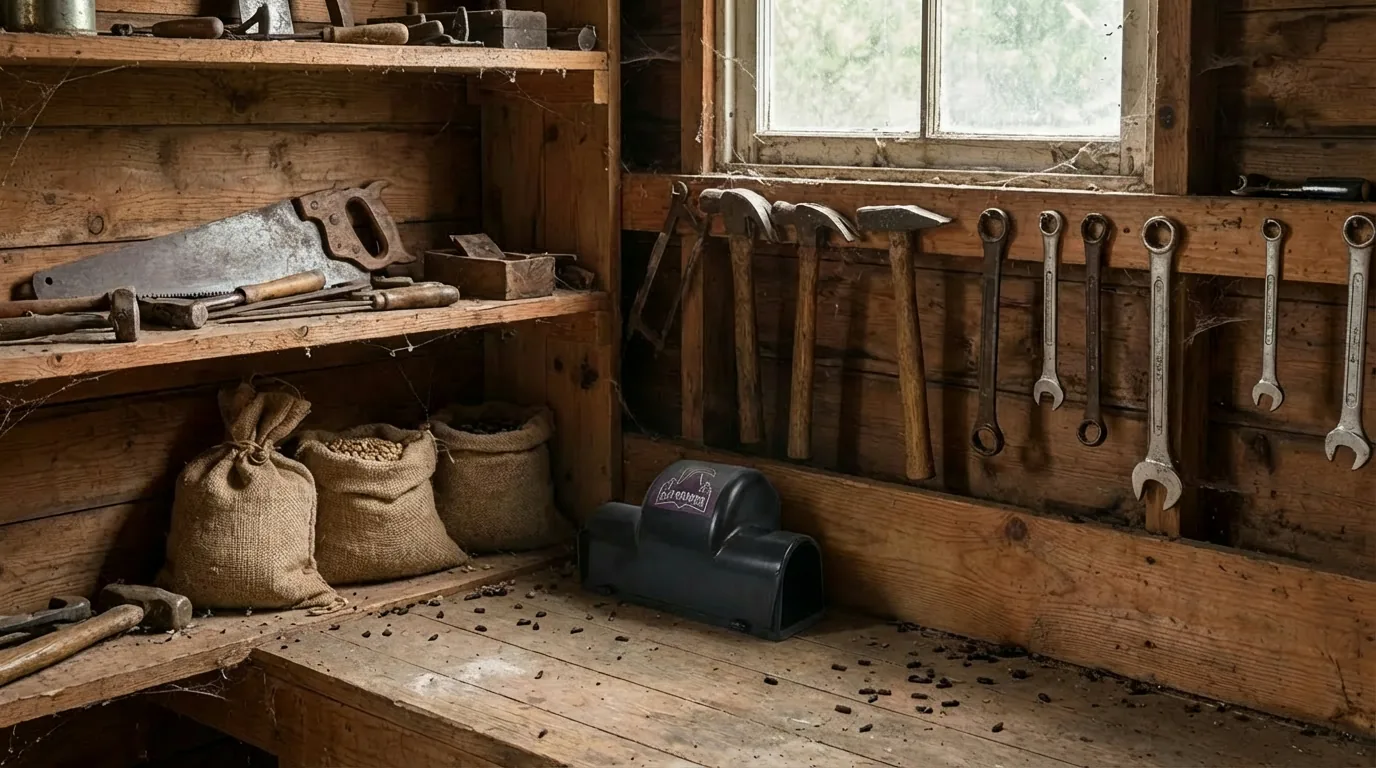
Rats in the garden or shed are more than an eyesore. They can undermine structures, chew through stored items, spread disease and frighten family members every time someone goes outside. Common hotspots include compost heaps, under decking, around chicken coops, near bird feeders and inside sheds used to store pet food, seeds and tools.
In sheds, rats are drawn to stored bird seed, pet food, bulbs, grass seed and other dry goods. If rats have got into a workspace rather than a store, see our guide to rat traps for garden offices, where cables and equipment are the main worry.
Types of rat traps for outdoors compared
Not every rat trap is suitable for use outside. The table compares the common options for a garden where wildlife and pets are around.
| Method | Risk to wildlife and pets | Outdoors | Where the rat ends up |
|---|---|---|---|
| Poison (rodenticide) | High. Bait can be eaten by other animals, and predators can eat poisoned rats. | Needs bait boxes used properly | Unknown. Often dies out of sight. |
| Open snap trap | High. Hedgehogs, birds, squirrels and pets can reach the bait and the jaws. | Bait degrades quickly in the weather | In the open, on the trap |
| Glue trap | High. Catches anything that walks on it and does not kill. | Not suitable | Stuck alive on the board |
| Live cage trap | Low, but you must deal with a live rat. | Needs checking very often | Alive in the cage |
| Enclosed tunnel trap (Rat Reaper) | Low. The mechanism is covered and the entrances are rat-sized. | Yes, on firm ground under some cover | Killed instantly and contained inside the tunnel |
For a fuller comparison, read glue traps, live traps or instant kill.
Why poison and open traps are a problem outdoors
Rodenticides are particularly problematic outside. Poison grains or blocks laid in gardens and sheds can be eaten not only by rats but also by non‑target species such as birds and small mammals if bait boxes are not used properly. There is also the problem of secondary poisoning: predators such as owls, foxes and cats may eat poisoned rats and suffer harm themselves. For eco‑conscious gardeners and pet owners, this chain of risk makes poison a last resort rather than a first line of defence.
Uncovered snap traps pose a different set of issues. A wooden or plastic snap trap placed in a shed, along a fence or under a bird feeder may catch the wrong animal if it is not carefully protected. Hedgehogs, birds, squirrels and even pets can be injured if they investigate the bait. Weather also degrades bait quickly, so open traps need constant attention.
How an enclosed tunnel trap works in a garden
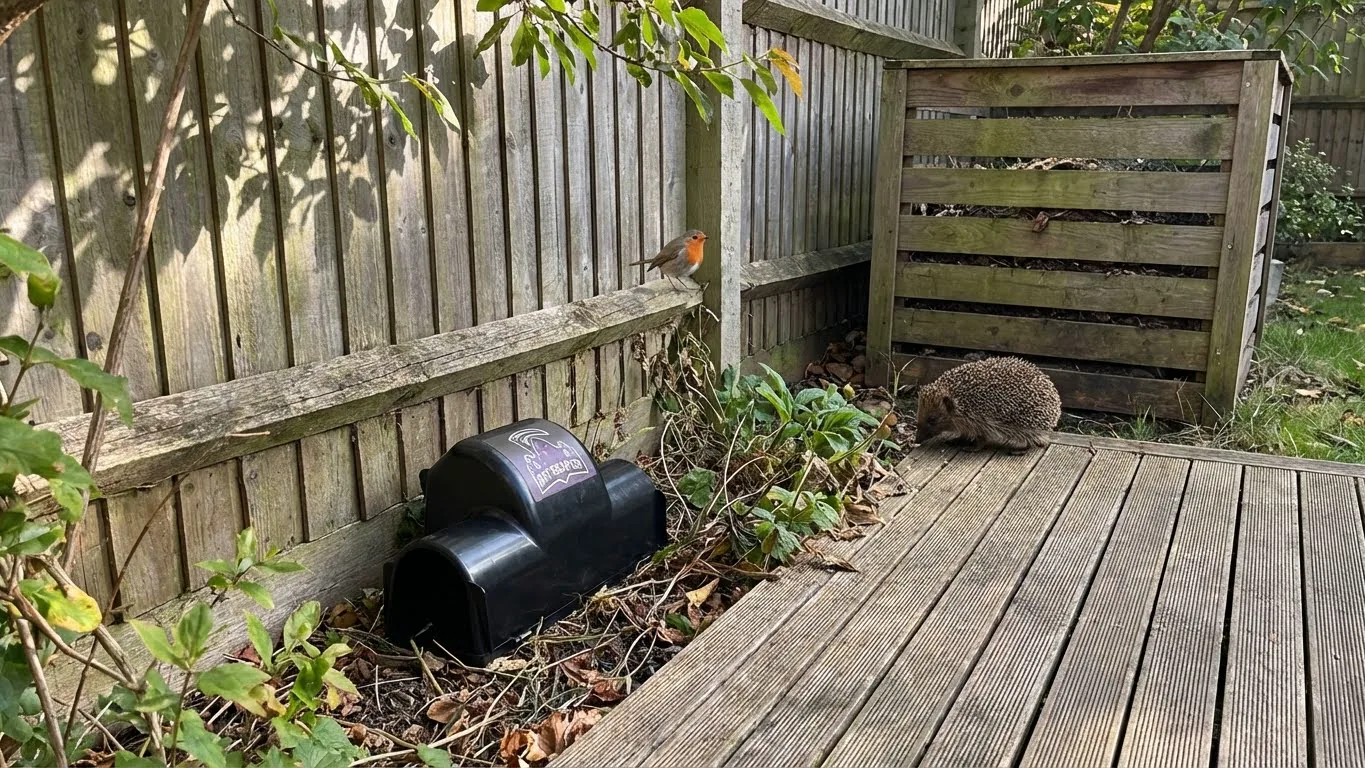
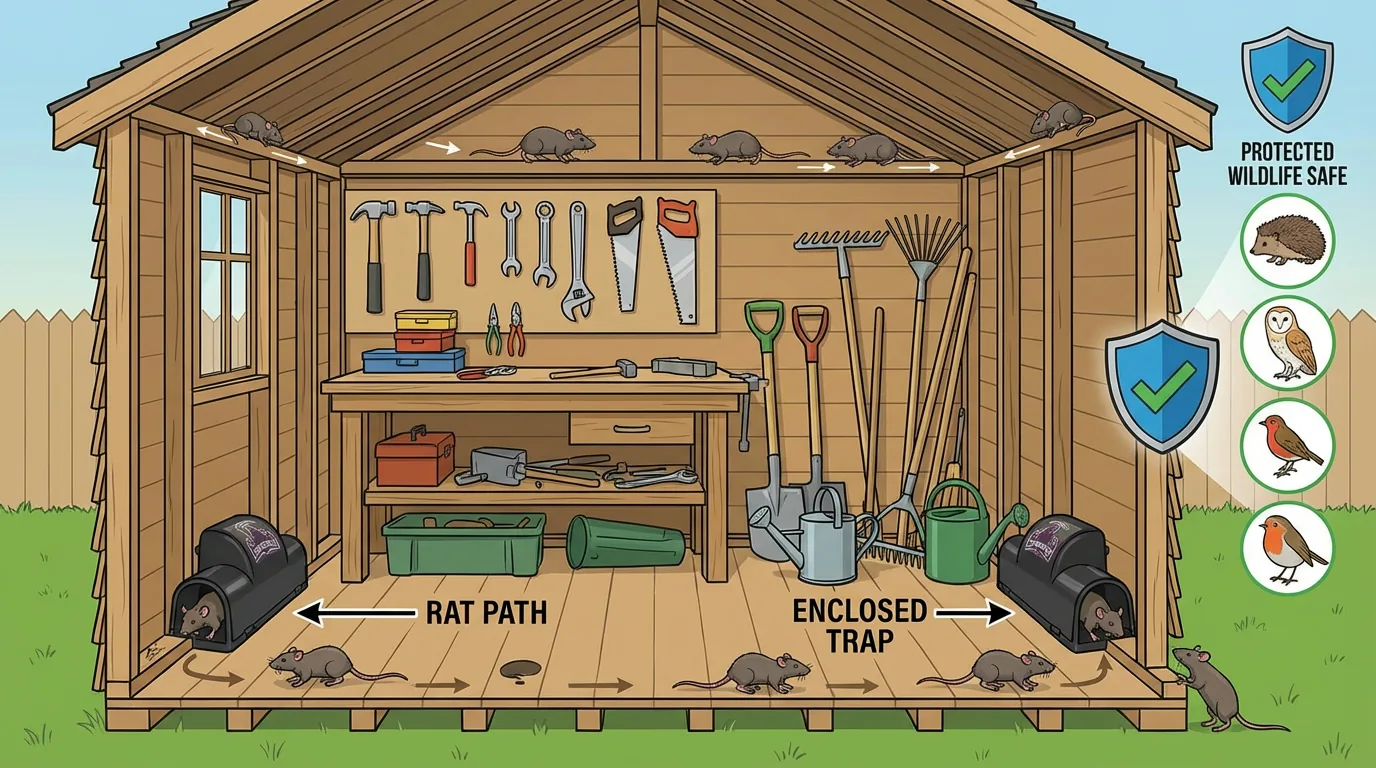
Enclosed tunnel traps like Rat Reaper are designed with these challenges in mind. The covered housing and narrow dual entrances create a rat‑sized tunnel that non‑target animals struggle to access, while the internal mechanism is completely hidden from beaks, paws and curious noses. Rats treat the tunnel as part of their usual route. Once they pass over the trigger, a powerful internal strike delivers an instant kill, contained within the enclosure.
You can see how other animals react to the trap in our short video, why Rat Reaper is safe for pets and wildlife.
Where to put rat traps in the garden
Rats prefer to run along edges rather than across open ground, so placement matters as much as the trap.
- Follow solid edges. Set the trap along fence lines, walls, the side of sheds, compost heaps or decking, near burrows or smear marks.
- Tuck it into cover. Behind pots, under shrubs or hedges, or under a decking edge. Rats feel secure approaching it, and it is less obvious to other animals.
- Use firm, level ground. Some overhead cover protects the trap from heavy rain and reduces slugs getting at the bait.
- Keep it away from children and pets. Always site it where they cannot easily reach it.
Where to put rat traps in a shed
Look for signs of activity around stored bird seed, pet food, bags and boxes, and along the base of the walls. Place the trap directly on these runways, tight to the wall or next to entry gaps. Avoid the middle of the floor. Darker, sheltered corners and the perimeter are where rats will meet it naturally.
Keeping hedgehogs, birds, squirrels and pets safe
Wildlife‑friendly trapping is about more than the device itself. It also depends on how and where you use it.
Hedgehogs
Adult hedgehogs will not fit into the tunnel, but very small juveniles potentially could. To make the trap hedgehog‑safe, raise it about 300 mm (12 inches) off the ground on an upturned plant pot or similar, and give rats a simple ramp such as a strip of wood or a broom handle. Hedgehogs dislike climbing, so they will not go up the ramp. Rats will have no problem.
Squirrels
Smaller squirrels may be attracted by peanut‑based bait. If squirrels visit your garden, switch the bait to a meaty wet dog food, not dry kibble. Squirrels do not eat meat and will ignore it, while rats remain very keen on it.
Birds
The mechanism sits inside a covered tunnel, so there is nothing exposed for a bird to peck at. Keeping the trap under cover and away from feeders and bird tables makes it less obvious still.
Cats and dogs
There are no exposed jaws for a paw or nose to reach. Site the trap where pets cannot easily get at it, and read our guide for households with pets for more detail.
Foxes
If the trap has moved overnight, a fox has probably been investigating the scent. Rest a brick or similar heavy object on top. Rats can still enter normally.
The best bait for outdoor rat traps
An effective trap needs a bait that competes with the food already in your garden or shed. A rich, oily peanut‑based attractant is widely recommended as one of the best lures for rodents, and one formulated to stay soft and aromatic for days suits sheds and covered areas well. Rat Reaper comes with its own peanut‑based attractant. Other high‑fat, strongly scented foods such as chocolate spread or wet pet food also work.
If bait keeps disappearing outdoors and nothing is caught, slugs are often the cause, especially in warmer months. Move the trap a short distance to a drier spot.
How to catch a rat in the garden, step by step
- Find the runways. Look for droppings, smear marks, burrows and gnawing along fences, walls and shed bases.
- Wear gloves. Rats are sensitive to human scent on new objects, and it can make them slower to approach.
- Bait and set at least two traps. Use more along long fences or where activity is heavy.
- Place them on the runways, tight to the edge and under cover.
- Leave them alone. Rats can avoid a new object for several days. Many people get a catch on the first night, but do not keep moving the trap.
- Empty, rebait and reset. Open the trap and tip the rat into a bag without touching it. The trap is reusable.
- Keep traps set for several days after the last catch, then remove food sources and shelter so new rats do not move in.
Garden rat trap questions
Are rat traps safe for hedgehogs?
Open snap traps are not. An enclosed tunnel trap is much safer because adult hedgehogs cannot fit inside. To protect small juveniles as well, raise the trap about 300 mm on an upturned plant pot and add a ramp for the rats.
Will a rat trap catch squirrels?
Smaller squirrels can be drawn to peanut‑based bait. Use meaty wet dog food instead when squirrels are around. They ignore it and rats do not.
Can rat traps be left outside in the rain?
Rat Reaper can be used outdoors. Place it on firm, level ground under some cover, such as a decking edge, shed overhang or shrubs, to protect it from heavy rain.
How many rat traps do I need for a garden?
For light activity, start with at least two in the problem area. For heavier infestations or long fence lines, space several traps along the runways for faster results.
How long does it take to catch a rat outside?
It can happen on the first night, but rats are cautious of anything new and may ignore a trap for several days. Keep it in place on an active route.
How do I dispose of a dead rat?
Wearing gloves, tip the rat from the trap straight into a plastic bag and tie it. UK councils allow a bagged dead rat to go in your general waste bin.
The best rat trap for gardens and sheds
The best rat trap for gardens and sheds balances three goals: effective rat control, safety for pets and wildlife, and minimal environmental impact. An enclosed, instant‑kill tunnel trap with good bait and robust construction offers an answer that poisons and open traps struggle to match. If rats have also reached the house, see our guides for lofts and kitchens, or go straight to where to buy Rat Reaper.