The best rat traps for a loft or attic are enclosed, kill instantly and keep the body inside the trap. A loft is dark, cramped and full of wiring and insulation, so you need something that is safe to set between joists and that does not leave a rat to die out of reach. This guide covers the signs of rats in the loft, which traps suit a roof space, where to set them and how to stop rats coming back.
The short answer
- Use an enclosed instant‑kill trap. No exposed jaws near your fingers, stored boxes or cables.
- Avoid poison in a loft. Rats can die deep in insulation or wall cavities, causing smells and flies.
- Set traps on the runways. Along joists, beams, pipes and walls where you see droppings or smear marks.
- Use several traps in a larger loft, leave them for at least a week, then seal the entry points.
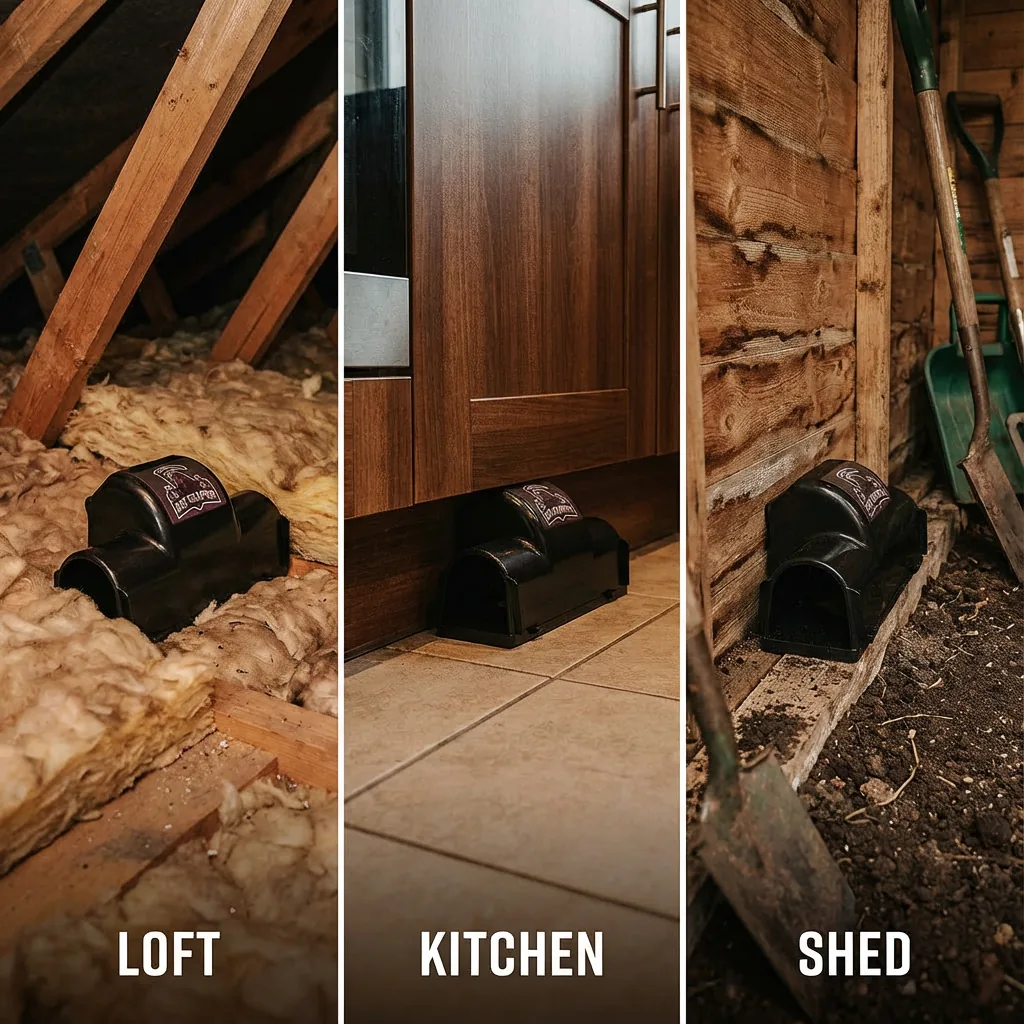
Signs of rats in the loft
Hearing scratching, scurrying or gnawing above your head is enough to make anyone uneasy. The loft or attic is one of the most common places for rats to set up home, because it offers warmth, insulation to burrow into and plenty of hidden runways where they can move undisturbed.
- Noises in the roof space, such as scratching, scurrying or gnawing.
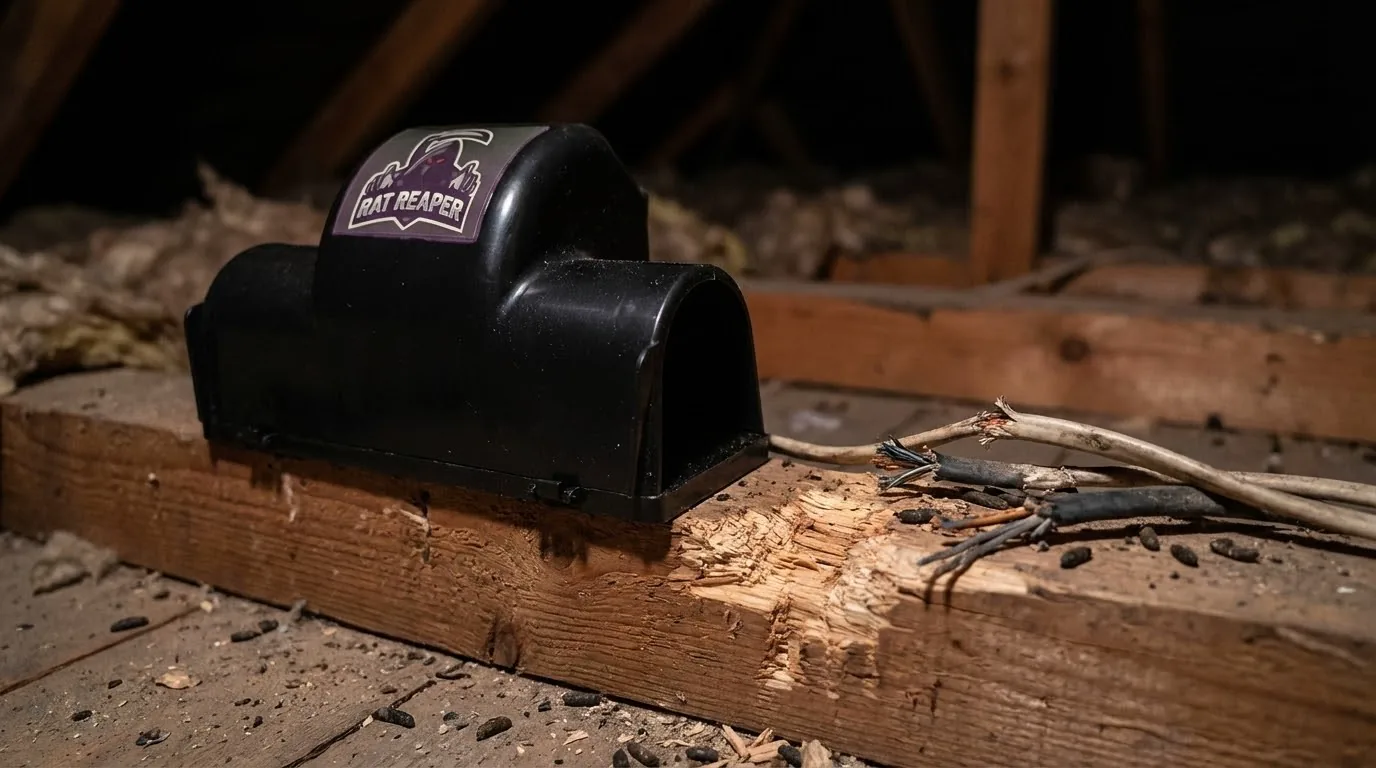
- Droppings along joists and the edges of the loft.
- Smear marks on timbers, pipes and walls that rats brush past.
- Gnawed timbers or cables.
- Disturbed or tunnelled insulation.
Left unchecked, those noises can turn into chewed cables, damaged insulation and even a potential fire risk. Choosing the right rat traps for a loft is about protecting your home from serious, expensive damage, not just catching a couple of rodents.
What to look for in rat traps for a loft
In a loft, visibility is poor, footing is unstable and you are usually working on narrow joists with deep insulation on either side. Four things matter.
- An enclosed mechanism. Lofts are full of things you do not want to touch the business end of a trap: stored boxes, suitcases, bags of clothes and your own hands. With an enclosed trap there are no exposed metal jaws waiting to catch fingers as you position it.
- An instant kill. A powerful mechanism means you are not left dealing with half‑caught or suffering animals in a space that is awkward to reach.
- A contained body. You know exactly where the rat will be: inside the tunnel, out of sight and easy to remove.
- Bait that lasts. A warm roof space dries ordinary bait quickly, and every rebait is another trip up the ladder.
Types of rat traps for lofts compared
| Method | Setting it in a cramped loft | Where the rat ends up |
|---|---|---|
| Poison (rodenticide) | Easy to lay, but carries a risk to pets and wildlife if misused | Unknown. Often deep in insulation, wall cavities or behind pipework, leaving odours and flies. |
| Open wooden snap trap | Awkward. Can go off in your hand while you place it between joists or near wiring. | On the trap, in the open |
| Enclosed tunnel trap (Rat Reaper) | Safe. The mechanism is inside the housing and it sits on a joist or board. | Killed instantly and contained inside the tunnel |
Many homeowners start with poison or a cheap wooden snap trap. They look like quick, low‑cost fixes, but both cause problems in a roof space. Our guides on poison versus traps and glue, live and instant‑kill traps go into more detail.
Why a tunnel trap works well in a roof space
Rat Reaper's covered tunnel and dual‑entry design come into their own in a loft. The trap forms a see‑through tunnel that rats instinctively treat as a safe passage along their regular route instead of a suspicious dead end. They are more likely to commit fully and move through the trap, rather than sniffing around the entrance. The internal mechanism then delivers an instant, humane kill once the rat reaches the trigger point.
Our short video, the tale of two entrances, shows why the through‑tunnel matters.
Where to set rat traps in a loft
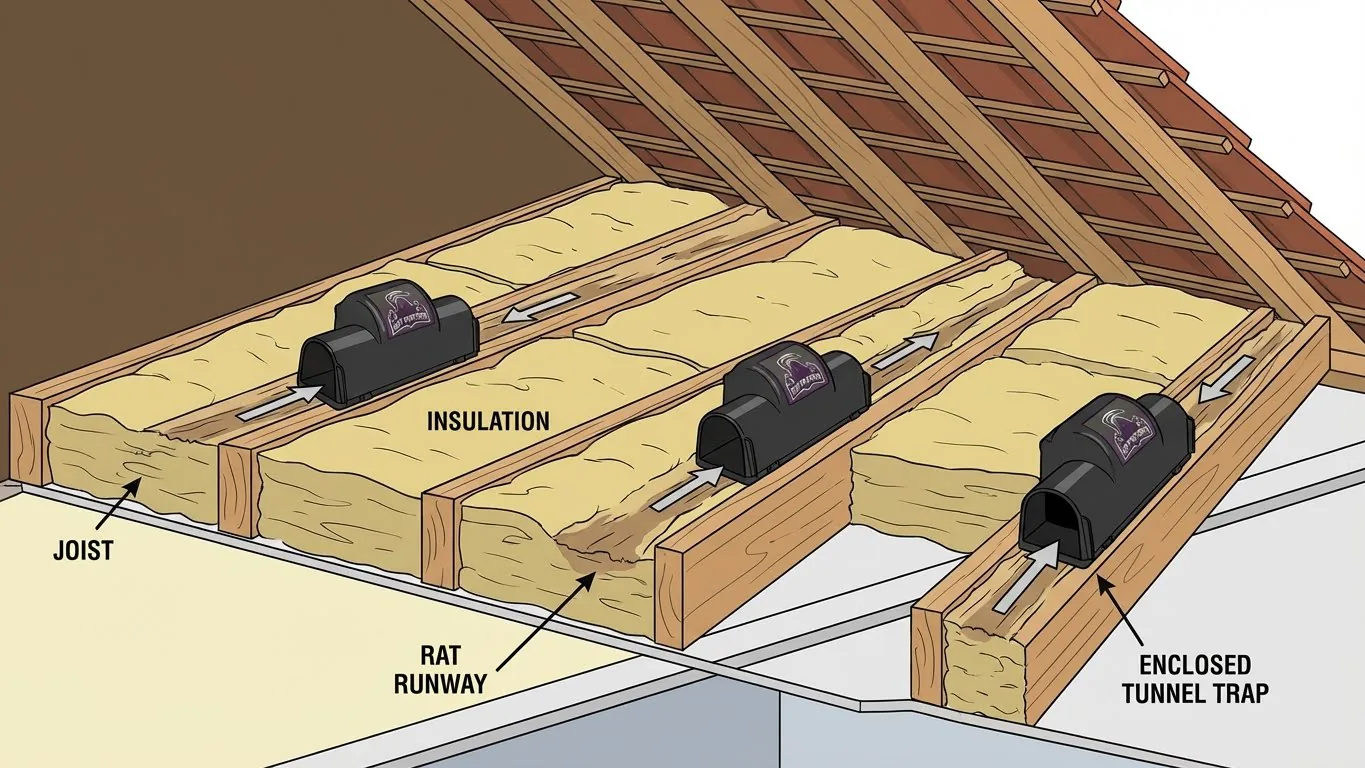
Rats run along joists, beams, pipes and the edges of insulation rather than across open boards.
- Set traps on active runways, where you see droppings, smear marks or gnawed material.
- Place the tunnel snug against a joist, pipe or wall, not in the middle of the loft.
- Give it a stable base. Sit it on a joist or on a board laid over the insulation.
- Use several traps along different runways in a larger loft or where activity is heavy.
The best bait for a loft
Food in a loft is limited, so a highly attractive bait stands out. Rat Reaper uses a peanut‑butter‑based attractant formulated to be more oil‑rich and longer‑lasting than ordinary peanut butter, which is already widely recommended as one of the most effective baits for rats. In a warm roof space where standard peanut butter might dry out overnight, this slower‑drying bait keeps working for days and cuts the number of trips up to rebait.
How to get rid of rats in the loft, step by step
- Find the runways. Look for droppings, smear marks, gnawed timbers and disturbed insulation.
- Wear gloves. Rats are sensitive to human scent on new objects.
- Bait and set several traps, each snug against a joist, pipe or wall on a runway.
- Leave them in place for at least a week. Rats can avoid a new object for several days before trusting it.
- Check regularly. Empty each catch into a bag without touching it, then rebait and reset.
- Carry on until the signs stop. Keep traps set for several days after the last catch.
- Seal the entry points so new rats cannot move in.
How to stop rats getting back into the loft
Traps remove the rats that are already there. Sealing entry points, tidying food sources and reducing shelter are what stop new ones arriving. Once the loft is quiet, look for the gaps they used and block them, and store anything edible, such as bird seed or pet food, in sealed containers. The same applies outside: if rats are living in the garden, deal with them there too. See our guide to rat traps for gardens and sheds.
Loft rat trap questions
How many rat traps do I need in a loft?
Start with at least two. For a larger loft or heavier activity, use several spaced along the active runways for faster results.
How long does it take to catch rats in a loft?
Sometimes the first night, but rats are wary of new objects and may ignore a trap for several days. Leave traps in place for at least a week and avoid moving them.
Is poison a good idea in a loft?
It has a serious drawback. Poisoned rats can die deep inside insulation, in wall cavities or behind boxed‑in pipework, causing smells and flies that are hard to deal with. With a trap, the body is inside the tunnel.
The bait keeps going but the trap has not fired. Why?
Indoors this usually means mice or very young rats that are too light to trigger the standard setting. Place a 2‑pence coin on the green trigger plate before you set the trap to make it more sensitive. Never add the coin after the trap is set.
How do I know the rats have gone?
Keep traps set for several days after the last catch. If there are no new droppings, gnaw marks or noises and the traps stay empty, the activity is likely over.
How do I dispose of a rat caught in the loft?
Wearing gloves, open the trap and tip the rat straight into a plastic bag, then tie it. UK councils allow a bagged dead rat to go in your general waste bin.
The best rat trap for lofts
The best rat trap for lofts combines an instant kill, smart design and built‑in safety. An enclosed tunnel trap with dual entrances, long‑life bait and a powerful internal mechanism is easy and safe to use in an awkward roof space. If you want to stop the scratching in the ceiling, protect your wiring and insulation and avoid the mess and risk of poison, see where to buy Rat Reaper.