Rats in the garden or shed are more than just an eyesore. They can undermine structures, chew through stored items, spread disease and frighten family members every time someone goes outside. Common hotspots include compost heaps, under decking, around chicken coops, near bird feeders and inside sheds used to store pet food, seeds and tools. Many people instinctively reach for poison or basic traps, but outdoors these approaches can expose birds, hedgehogs, pets and other wildlife to unnecessary risk.
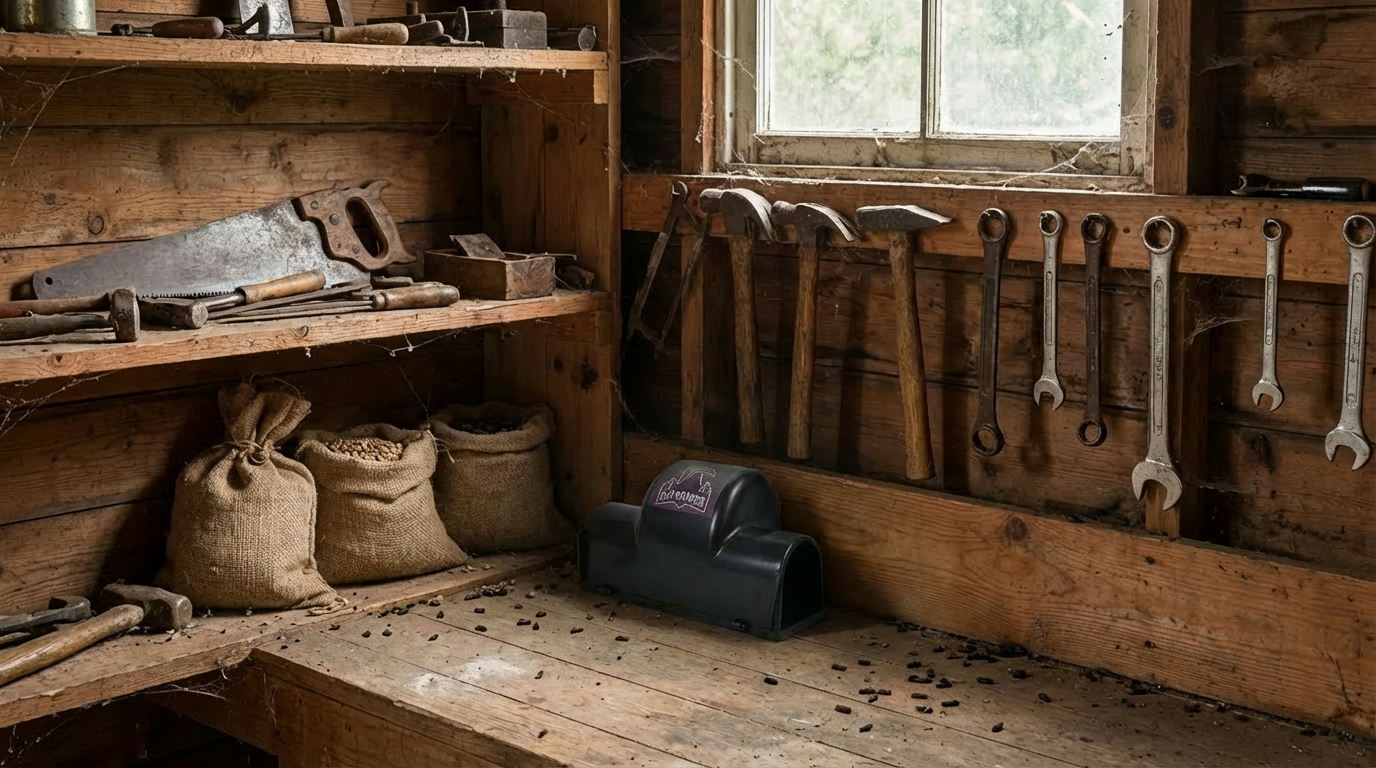
Rodenticides are particularly problematic outside. Poison grains or blocks laid in gardens and sheds can be eaten not only by rats but also by non‑target species such as birds and small mammals if bait boxes are not used properly. There is also the problem of secondary poisoning: predators such as owls, foxes and cats may consume poisoned rats and suffer harm themselves. For eco‑conscious gardeners and pet owners, this chain of risk makes poisons a last resort rather than a first line of defence. A mechanical approach, if done correctly, can be far more targeted and wildlife‑friendly.
Uncovered snap traps pose a different set of issues outdoors. A wooden or plastic snap trap placed in a shed, along a fence or under a bird feeder may catch the wrong animal if not carefully protected. Hedgehogs, birds, squirrels and even pets can be injured if they investigate the bait. Weather exposure can also degrade bait quickly, making traps less effective and requiring constant maintenance. To be truly suitable for gardens and sheds, the best rat trap has to combine lethal efficiency with strong physical safety features and weather resilience.
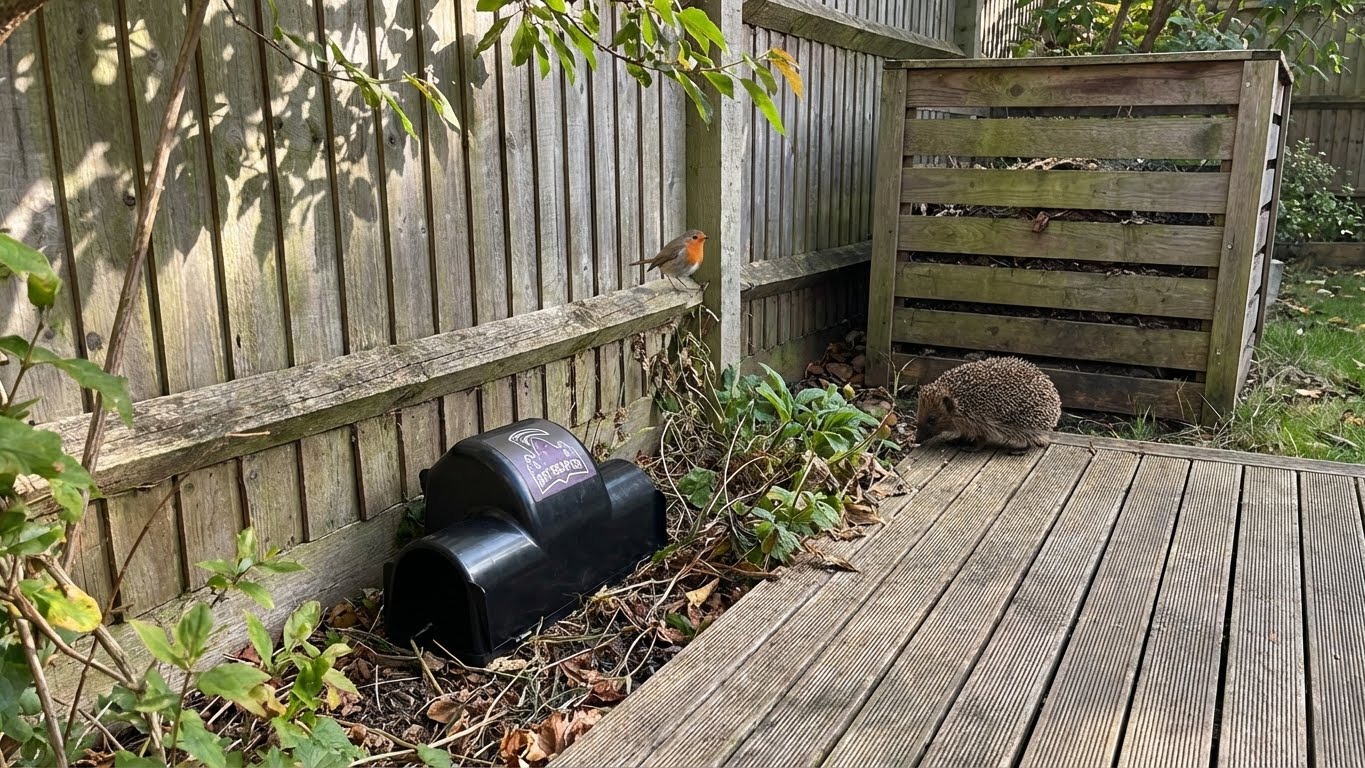
Enclosed tunnel traps like Rat Reaper are designed with these challenges in mind. The covered housing and narrow dual entrances create a rat‑sized tunnel that non‑target animals struggle to access, while the internal mechanism is completely hidden from beaks, paws and curious noses. Placed along a wall, fence base, shed interior or known runway, the trap sits quietly in the background, allowing rats to treat it as part of their usual route. Once they pass over the trigger, a powerful internal strike delivers an instant kill, contained within the enclosure.
In sheds, rats are often drawn to stored bird seed, pet food, bulbs, grass seed or other dry goods. An effective trap needs a bait that competes strongly with these food sources. A rich, oily peanut‑based attractant has been widely recommended as one of the best lures for rodents, and when formulated to remain soft and aromatic for days, it is particularly suited to semi‑outdoor settings like sheds or covered areas in the garden. Combined with smart trap placement and regular checks, this allows you to control rat numbers without scattering loose food or toxins around the space.
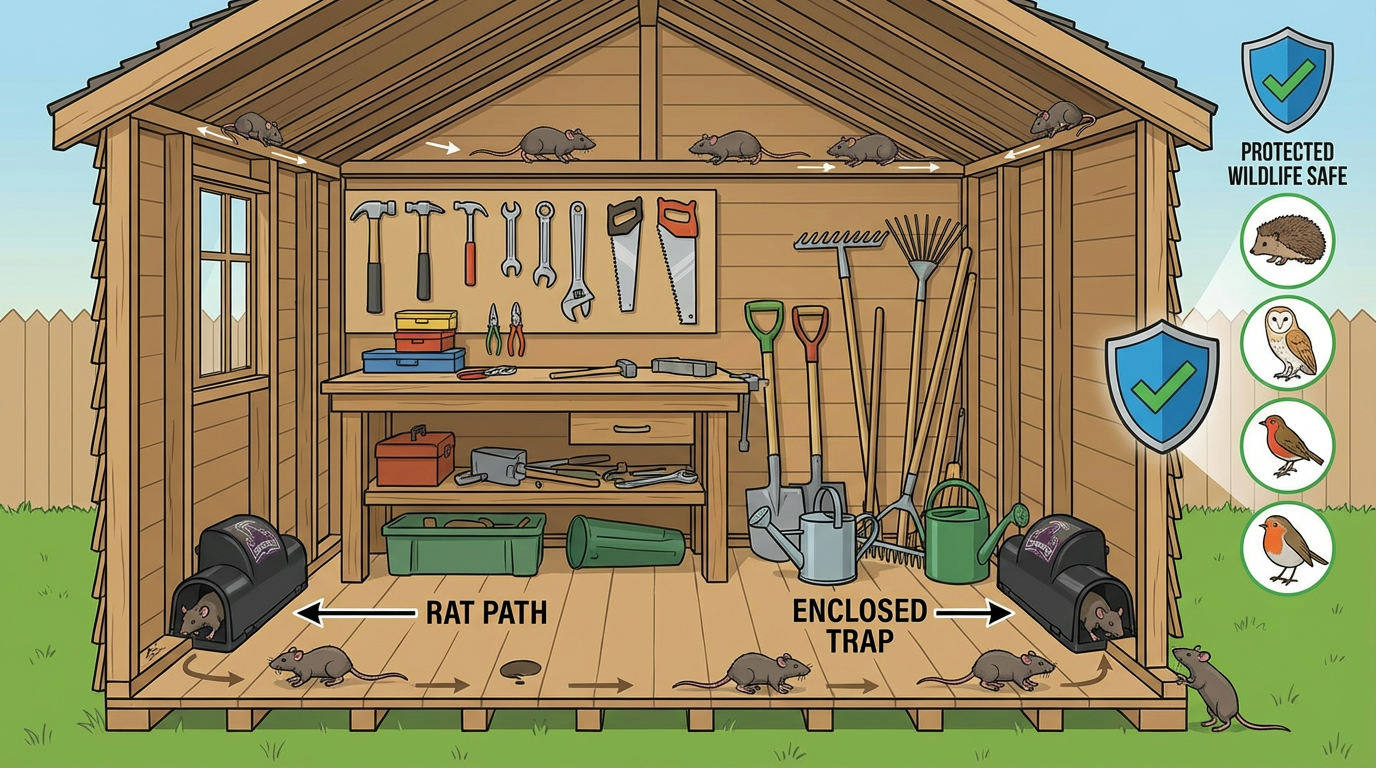
Wildlife‑friendly trapping is about more than just the device itself; it also involves how and where you use it. The best rat trap for gardens and sheds should be placed where rats travel, such as along walls, behind storage, or near burrow entrances, and ideally under some cover so it is less obvious to other animals. This is especially important for households with pets where additional safety measures are needed. By choosing a fully enclosed trap design, checking it regularly and disposing of catches responsibly, you can significantly reduce rat activity without harming the wider ecosystem.
Ultimately, the best rat trap for gardens and sheds balances three goals: effective rat control, safety for pets and wildlife, and minimal environmental impact. An enclosed, instant‑kill tunnel trap with high‑quality bait and robust construction offers an answer that poisons and open traps struggle to match. For homeowners who want to safeguard their garden, protect stored items in sheds and do right by wildlife at the same time, a solution like Rat Reaper provides the kind of targeted, modern approach that fits today's expectations for responsible pest control.