At first glance, the classic wooden snap trap looks like the obvious, no‑nonsense answer to a rat problem. It is inexpensive, widely available and familiar. Many people assume that because professionals have used snap traps for years, a handful of cheap wooden boards must be the best rat trap choice for their home. However, when comparing different trap types, the safety and effectiveness of enclosed designs often make them the better choice. But look closer, and a different picture emerges. Low‑cost, exposed traps come with hidden safety and welfare risks that modern enclosed designs are specifically built to avoid.
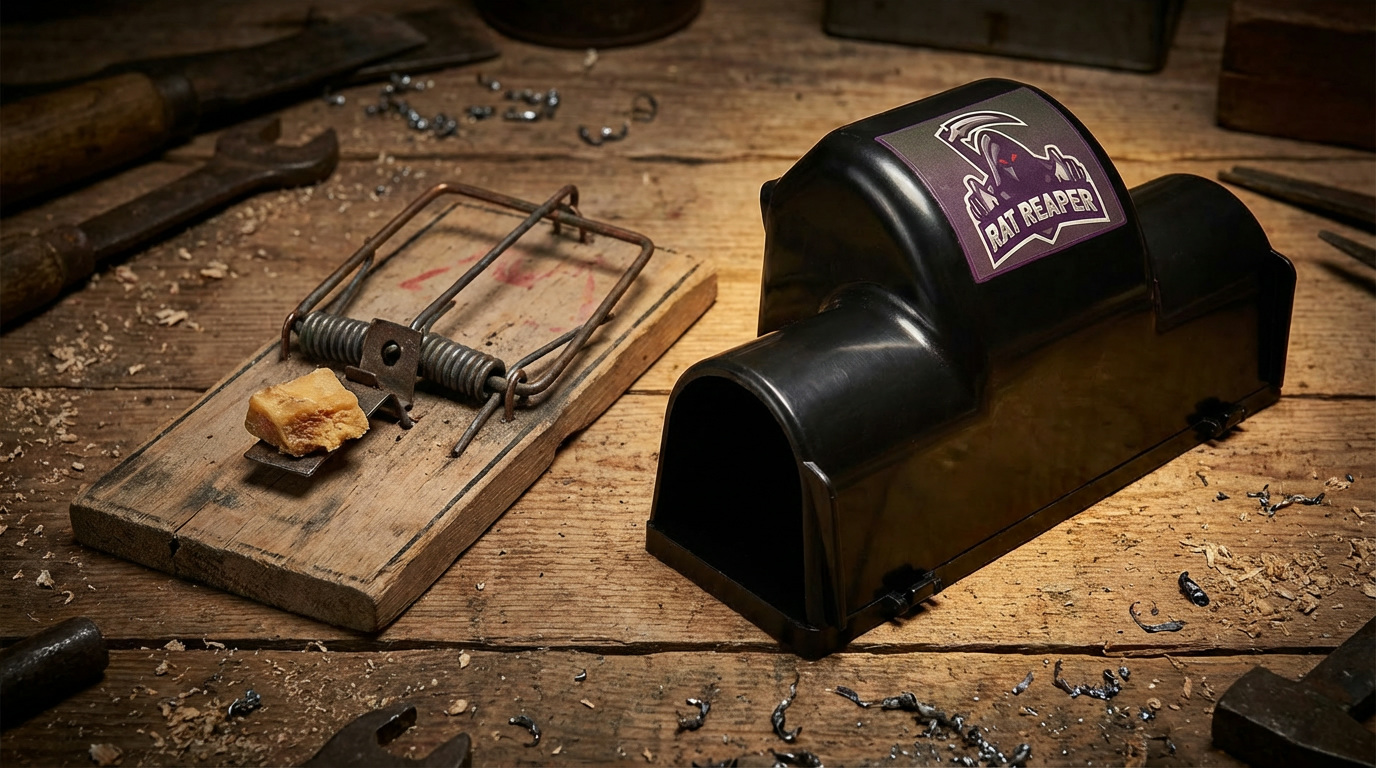
A good snap trap can indeed provide a quick kill when correctly engineered and properly set, striking the upper neck or skull and causing very rapid unconsciousness. The problem is that not all traps are created equal. Budget wooden models may have inconsistent trigger sensitivity, weaker springs, or poor construction that leads to misalignment. As a result, rats can be caught by a limb, tail or mid‑body instead of the head or neck, leaving them alive, injured and suffering until someone discovers them. This is unpleasant to deal with and falls short of modern expectations for humane pest control.
Safety is another major concern with exposed wooden traps, especially in busy homes. Snap traps close quickly and with considerable force; guidance from pest and welfare organisations warns that non‑target animals and children can be injured if they come into contact with them. This is particularly concerning for families with pets where the risk is even higher. Curious pets may sniff or paw at baited traps and get their noses or paws caught. Children crawling on the floor or exploring under furniture can trigger them accidentally. Even adults risk painful mishaps when placing, baiting or moving traps in tight spaces such as under kitchen units or in cluttered lofts.
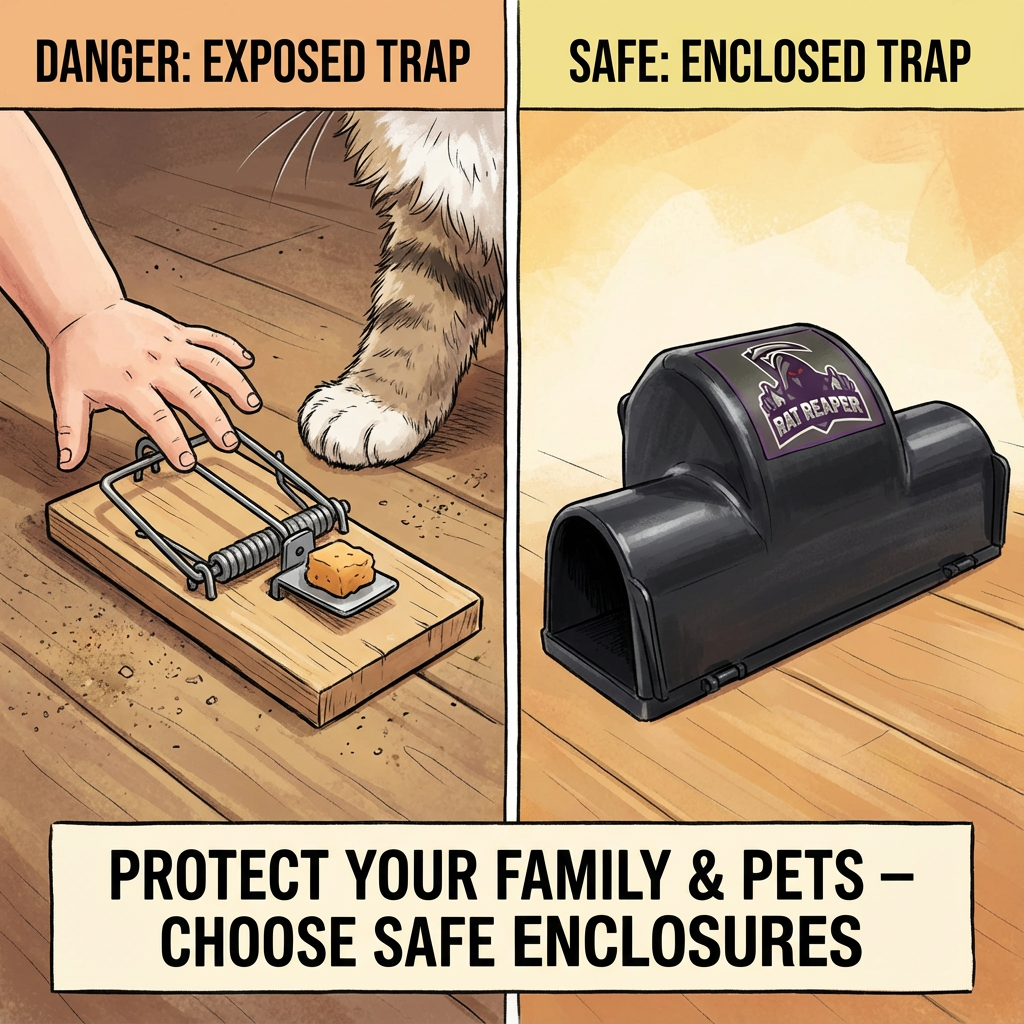
To mitigate these risks, many professional recommendations state that snap traps set indoors or outdoors should be placed inside secure, tamper‑resistant boxes or under suitable cover to limit access by non‑target animals. In other words, the open wooden trap on its own is not considered safe enough; it needs an additional protective housing. Once you factor in the cost and effort of adding boxes or tunnels, the apparent price advantage of the cheapest traps starts to shrink.
By contrast, enclosed instant‑kill traps integrate this protective housing from the start. Products like Rat Reaper and similar tunnel‑style devices encase the mechanism in durable plastic, with narrow entrances sized for rodents and semi‑transparent housings that allow at‑a‑glance inspection while obscuring the catch. The powerful internal mechanism is still there, but it is shielded from pets, children and most wildlife, making it far more suitable for use in kitchens, utility rooms, lofts and gardens where families actually live.
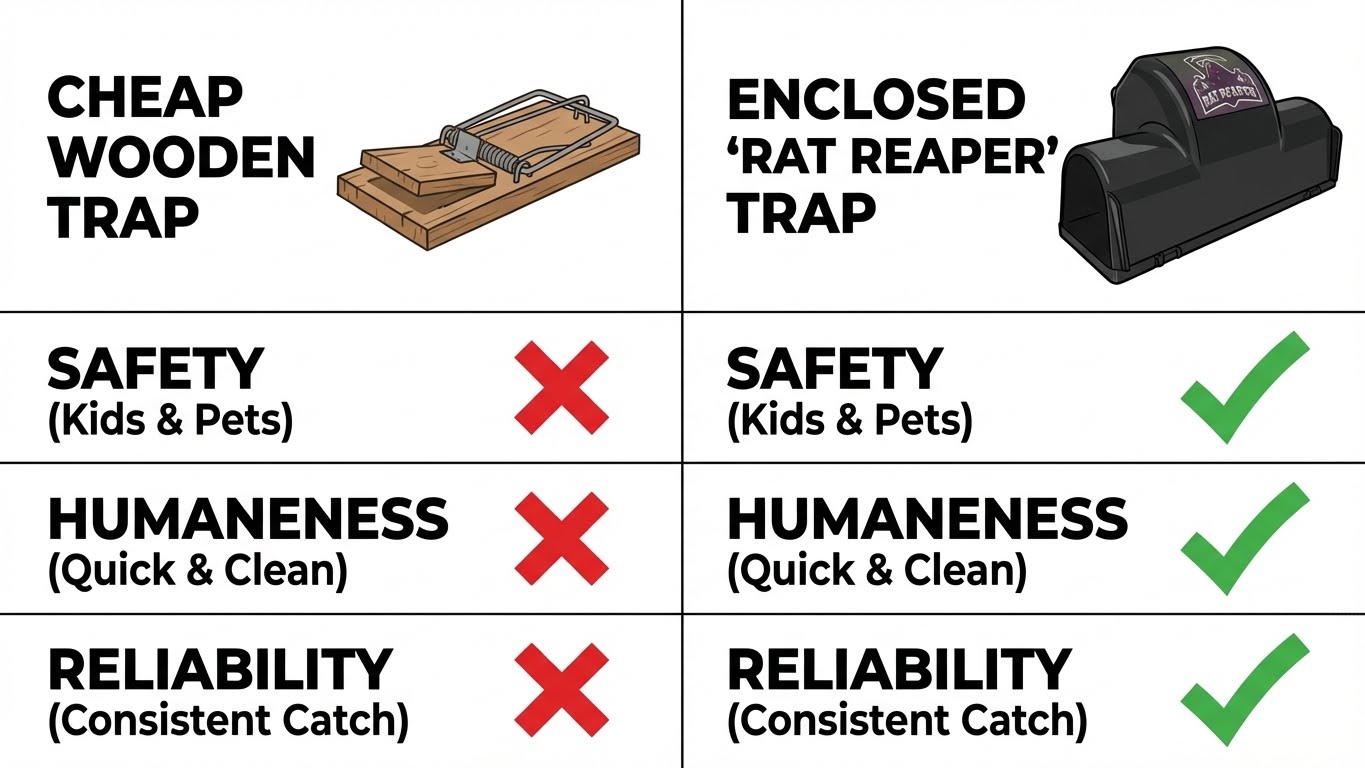
Hygiene and user experience also favour enclosed traps. With a bare wooden trap, the carcass is exposed, which many people find off‑putting. Blood, fluids or parasites can contaminate the surrounding area, and you have to get uncomfortably close to remove the body. Enclosed traps, on the other hand, contain the mess. You can dispose of the rat without direct handling, then clean and reset the trap as needed. For homeowners who are not professional pest controllers, this simpler, less confrontational process makes it far more likely that traps will be monitored and maintained properly.
From a long‑term effectiveness perspective, reliability and correct placement matter more than shaving a few pounds off the initial purchase price. A small number of well‑designed enclosed traps, used correctly, can outperform a scatter of cheap wooden devices that are mis‑set, mis‑placed or avoided by wary rats. When you want both humane kills and protection for the rest of your household, the "cheapest" option quickly looks like a false economy.
So, are cheap wooden rat traps really the best rat trap for modern homes? For most people, the answer is no. They can work, but they carry avoidable risks and discomforts that enclosed instant‑kill traps have been designed to solve. By choosing a robust tunnel‑style trap like Rat Reaper, you gain the speed and certainty of mechanical control while protecting pets, children and wildlife and making the whole experience cleaner and safer. In today's world, that combination of performance and safety is worth far more than saving a few pennies on a bare wooden board.