Garden offices and sheds have become prime real estate for rats, much like kitchens where food and warmth attract rodents. Warmth from electrics, quiet corners, stored pet food, seeds and cardboard boxes all create an ideal rat habitat just a few steps from your back door. Chewed cables can knock out power or internet, damaged stock can cost real money, and droppings contaminate workspaces and storage areas. To protect these spaces, you need the best rat trap setup for semi‑outdoor buildings, one that is effective, tidy and safe around pets and wildlife.
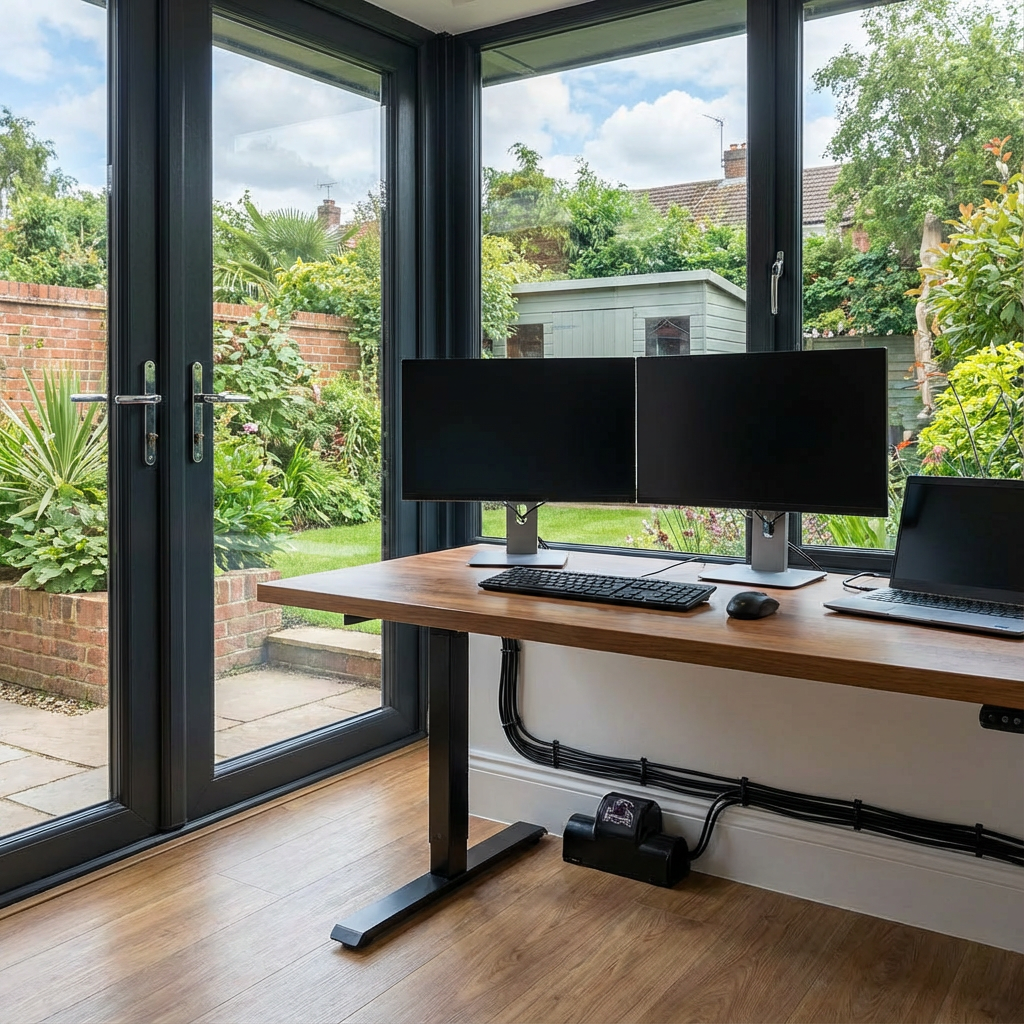
Many people still turn first to rodent poison sachets or loose bait in sheds, but this approach has serious drawbacks. Rodenticides carry a risk of primary poisoning if pets or non‑target wildlife access bait, and secondary poisoning if predators like owls, foxes or cats eat poisoned rats. In a garden office or shed that sits between house and garden, it is difficult to guarantee that nothing but rats will ever come into contact with the bait. Dead poisoned rats can also end up under floors or behind built‑in storage, creating odour and hygiene problems that are difficult to tackle. For many UK homeowners, especially those concerned about pets and wildlife, poison is no longer an acceptable everyday option.
Glue traps, once sold as a quick‑fix solution, are now banned in the UK because of the severe and prolonged suffering they cause. Trapped animals can remain alive for many hours, panicking and injuring themselves as they try to escape, which is why welfare organisations pushed for the ban and legislation has caught up. For anyone managing rats in a shed or garden office, glue boards are simply not on the menu – nor should they be.
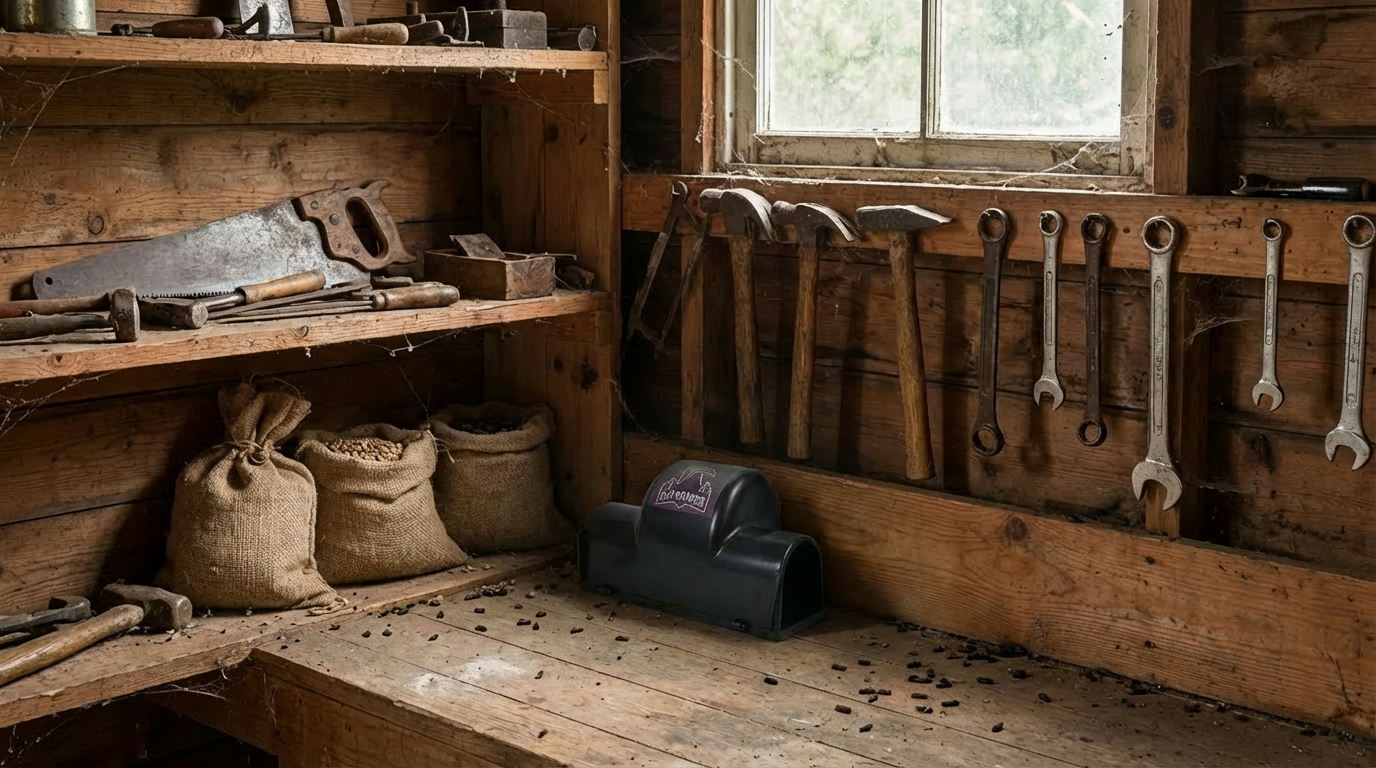
Traditional exposed snap traps are free of poison but bring their own challenges in a garden setting. A bare wooden or plastic trap laid on a shed floor, near a doorway, or beside compost or chicken feed can be triggered by non‑target animals if they gain access. In an outbuilding that you walk in and out of daily, there is also a real risk of stepping on or mishandling a set trap, especially when reaching into darker corners or behind shelving. For these reasons, humane control guidance recommends that snap traps be used inside protective housings or boxes where people and non‑target animals cannot easily reach the mechanism.
Enclosed instant‑kill traps are designed precisely for these environments. A tunnel‑style device like Rat Reaper houses a powerful mechanical kill bar inside a robust casing, with small dual entrances that effectively limit access to rats. To a rat following the edge of a wall, shelf or fence line, the trap appears as a short tunnel – something they naturally feel more comfortable entering than a dead‑end box. Once they step onto the trigger plate, the internal strike delivers a rapid, humane kill, and the body remains out of sight until you remove it.
In garden offices and sheds, bait choice is critical because there are often many competing food sources: bird seed, pet food, grass seed, fertiliser coated with organic material, even stored snacks in the office itself. High‑fat, high‑scent baits such as peanut‑based attractants have long been recommended as some of the most effective lures for rodents. Formulations that are more oil‑rich and slower to dry out work particularly well in these spaces, staying aromatic and appealing for days rather than crusting over overnight. Combined with good placement, this ensures your traps remain attractive between checks.
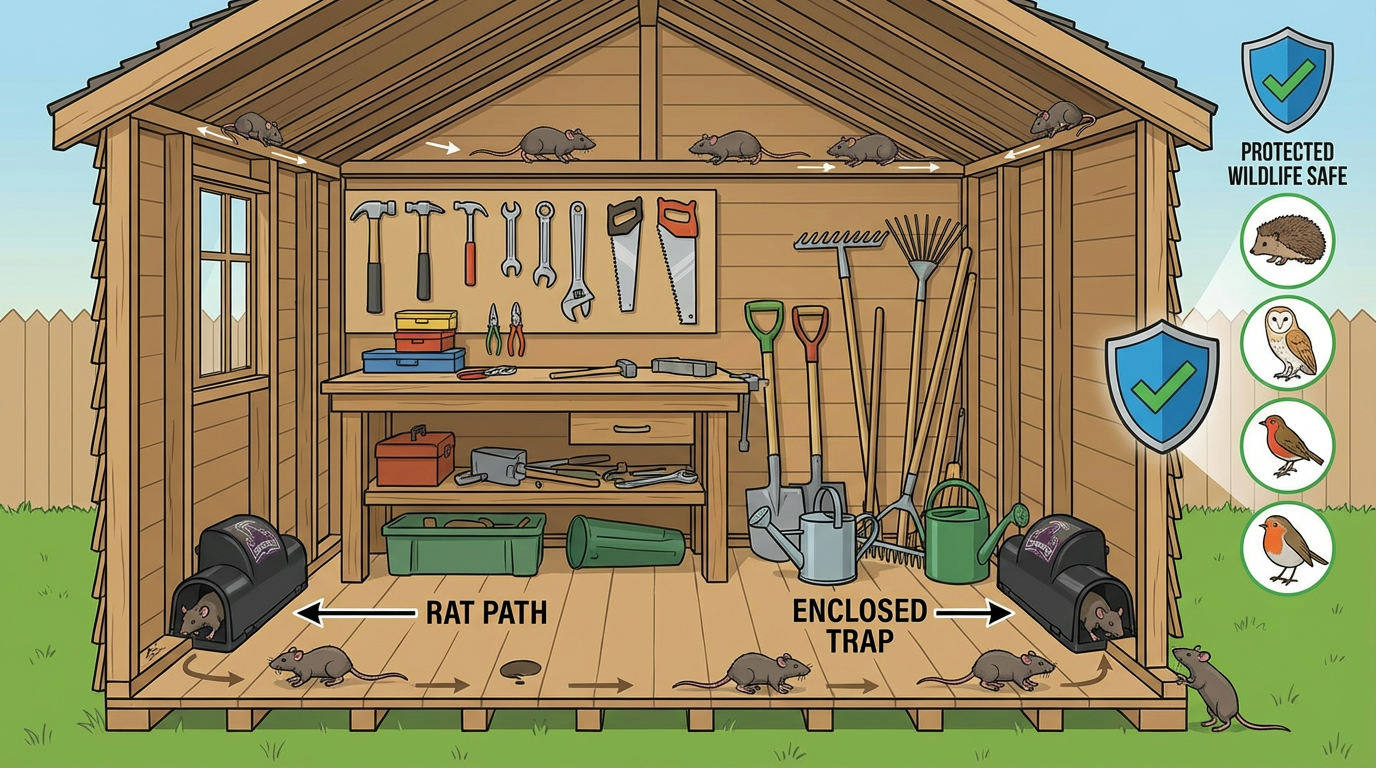
Strategic positioning makes the difference between "a trap in the shed" and "the best rat trap setup for the shed". Look for droppings, smear marks, gnawing on timbers or cables, and small holes where rats are squeezing in. These same principles apply to all garden and shed areas where rats may be active. Place enclosed traps directly along these routes: flush against walls, behind stored boxes, under shelving, or along cable runs where you have seen signs of activity. In a garden office, placing traps behind furniture, under desks along skirting boards, and near cable entry points will intercept rats before they can cause further damage.
Because enclosed traps like Rat Reaper are poison‑free and shield the mechanism, they fit well into an integrated approach that many UK pest professionals now recommend: proof openings, tidy and secure food sources, then use humane instant‑kill traps to remove the animals already inside. Regular checks and prompt disposal of carcasses help you track when the problem is under control and avoid lingering odours.
For UK homeowners who rely on their garden office or shed, the best rat trap is one that reflects modern expectations: no banned glue boards, minimal risk to pets and wildlife, no slow‑acting poisons, and a quick, clean kill when needed. An enclosed tunnel trap such as Rat Reaper provides that combination – strong mechanical performance, smarter design, and the peace of mind that comes from knowing you are tackling the problem effectively and responsibly.