For decades, rodenticides have been marketed as the default answer to rat problems. Boxes of bait blocks and grains line DIY store shelves, promising quick, easy control with minimal effort. But as awareness of animal welfare, environmental impact and secondary poisoning has grown, many homeowners are questioning whether poison is still the right choice. Increasingly, the best rat trap options are mechanical, instant‑kill devices rather than toxic chemicals.
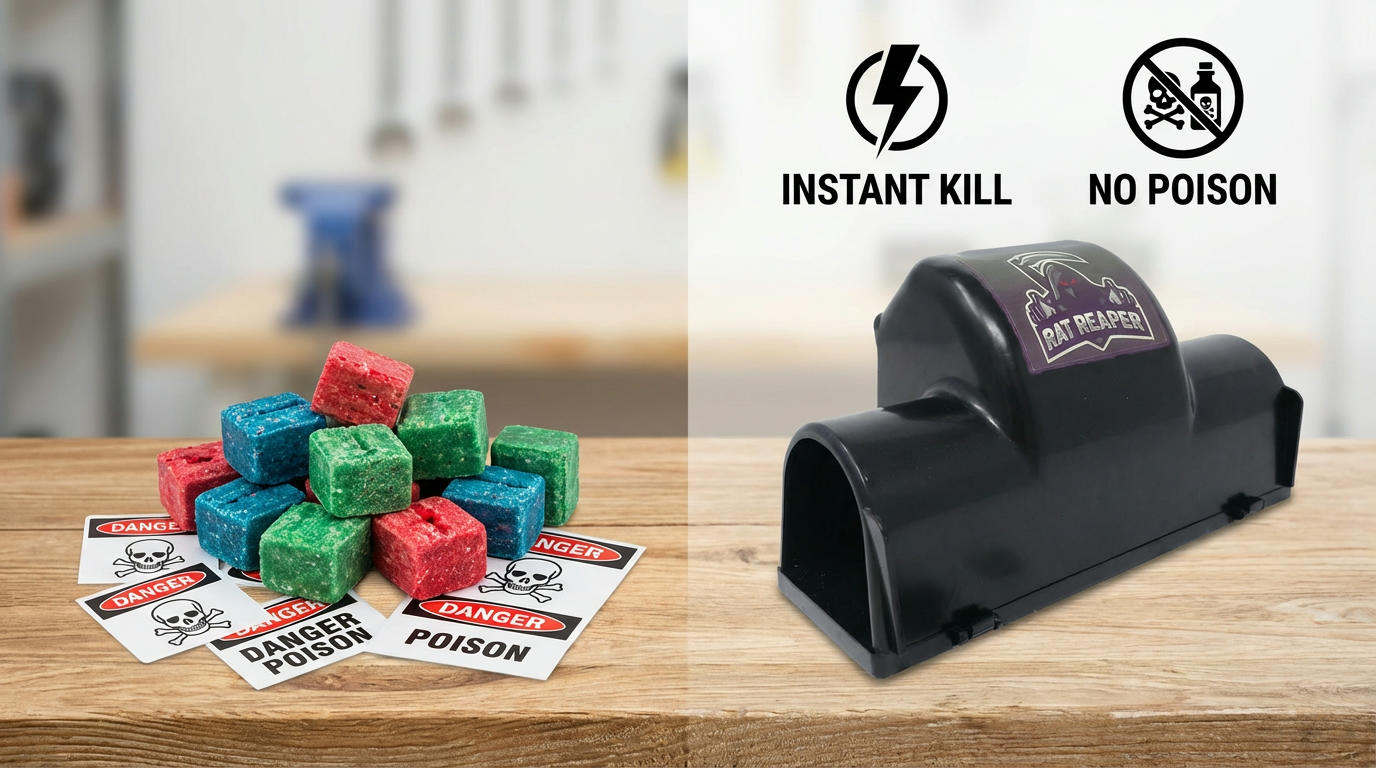
Rodenticides work by interfering with a rat's internal processes, often through anticoagulant compounds that cause internal bleeding over several days. This means the animal may suffer for a prolonged period before dying, which raises serious welfare concerns, especially when used in outdoor areas where wildlife may be affected. Studies assessing the humaneness of rodent control methods have found that many poisoning approaches score poorly because of the length and nature of suffering involved. For people who care about minimising suffering, poisoning rats is increasingly seen as a last resort rather than an acceptable everyday solution.
Poison also introduces risks that extend far beyond the target animal. Primary poisoning occurs when non‑target species such as pets, birds or small mammals eat bait directly; secondary poisoning happens when predators consume poisoned rodents. Owls, foxes, cats and other animals can all be affected, undermining local ecosystems and causing distress for owners if pets are involved. Misplaced or poorly protected bait stations in gardens or outbuildings further increase this risk. Regulations and guidance in many countries now encourage more careful, limited use of rodenticides, with a greater emphasis on alternatives.
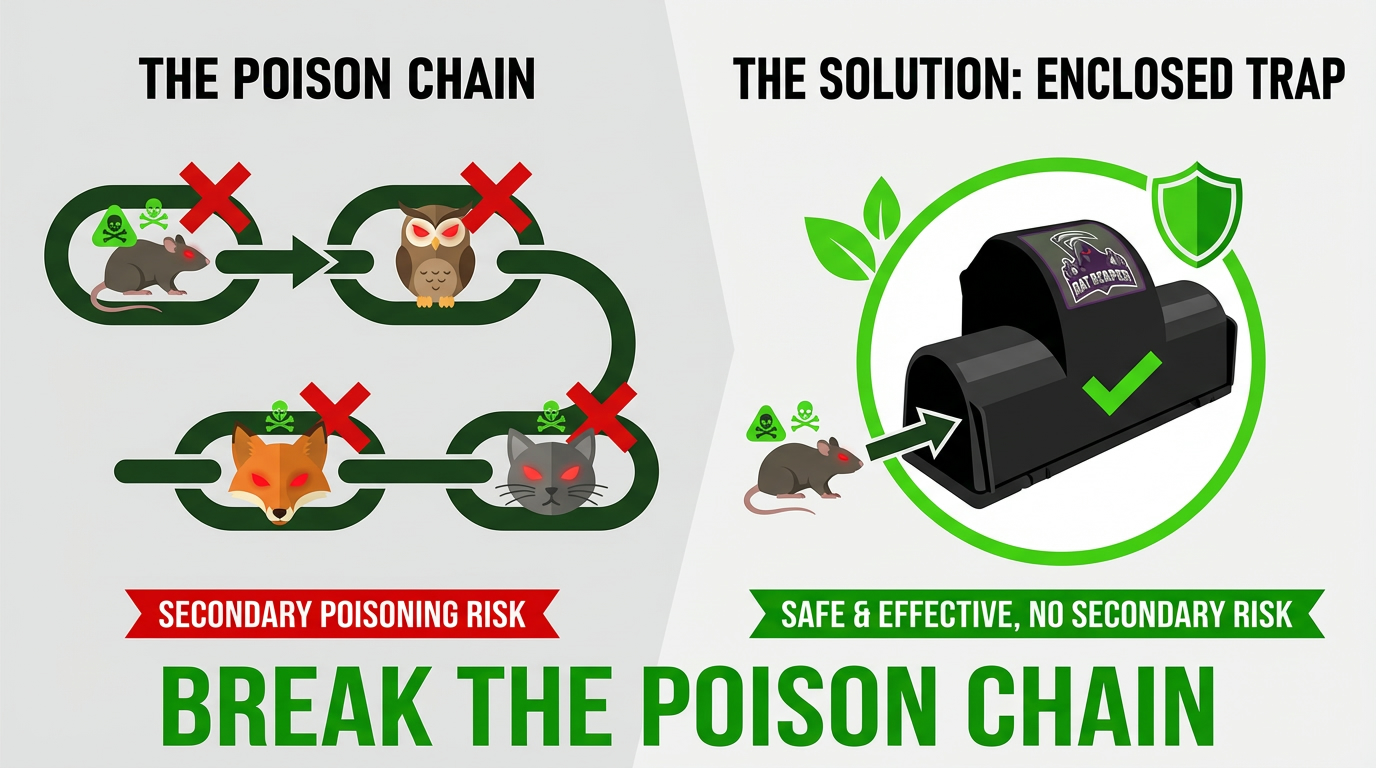
In contrast, the best rat trap solutions today focus on fast, targeted mechanical control. A well‑designed instant‑kill trap delivers a powerful, rapid blow to the head or neck, killing the animal quickly and reliably. When combined with an enclosed housing, as in tunnel‑style traps, this method reduces the likelihood of non‑target capture and eliminates the risk of secondary poisoning entirely. The trapped body is contained, easy to find and dispose of, and does not spread toxins through the food chain.
Different mechanical options exist, from basic snap traps and electric traps to more advanced enclosed systems. Cheap wooden snap traps can work, but they often have exposed mechanisms and inconsistent triggering, leading to misfires or incomplete catches that compromise welfare and safety. Electric traps can be effective but usually require power and are less suited to difficult locations like lofts or exposed garden corners. Enclosed instant‑kill tunnel traps like Rat Reaper combine the strengths of these approaches: a powerful mechanical kill, strong baiting, and a pet‑ and child‑safer housing that hides the mechanism and carcass from view.
From a practical standpoint, mechanical traps also give you more control over the process. You know where the rat will die: inside the trap. With poison, rats can wander and expire in wall cavities, under floors or in inaccessible roof spaces, creating odour, maggots and flies that are both unpleasant and challenging to resolve. With traps, you can monitor progress, see when activity has stopped, and remove bodies promptly, which is better for hygiene and for assessing the success of your control efforts.
There is also a growing ethical and regulatory push towards more humane pest control. Organisations providing guidance on rodent control increasingly recommend integrated approaches that prioritise proofing, hygiene and non‑poison methods, reserving rodenticides for when other options have failed or are impractical. In this context, the best rat trap is not just one that catches rats; it is one that aligns with modern expectations around animal welfare, environmental responsibility and household safety.
For homeowners, the choice between rodenticides and mechanical traps ultimately comes down to values as well as effectiveness. Poisons may appear convenient, but they come with hidden costs in suffering, secondary poisoning and loss of control over where animals die. Enclosed, instant‑kill traps such as Rat Reaper offer a cleaner, faster and more targeted alternative that fits the reality of modern domestic life. By combining smart design, strong attractants and robust killing power, they represent the direction in which humane, responsible rat control is clearly heading.